Home / Guides / Air fryer and oven running costs
Air fryer and oven running costs
Both appliances turn electricity into heat. The cheaper meal is the one that draws fewer kilowatt hours, which depends on the food, the batch size and whether the oven is cycling.

Our top picks
Start here.
These are ways of solving the job, not scored products. An Amazon button opens a search. The price is whatever is on the page today.
1,500 W
Our pick for one portion that fits in one basket
Air fryer
It heats a small cavity. That can mean fewer kilowatt hours than a full oven for a small meal. A second and third batch can erase it.
- Example running cost
- 1,500 W for 20 minutes = 0.5 kWh × 32.69p/kWh = 16.35p Upper bound if it drew the nameplate the whole time. A thermostat cycles, so a real cook is usually less.
- Honest measurement
- A plug-in meter, reset before you start
Pros
- Small basket, short cook, one portion
- Easy to meter at the socket
Flaws but not dealbreakers
- Several batches can cost as much as the oven
- The badge wattage is a maximum, not the meal
What it costs to run
Built from the cap file. One use is the wattage and time on the card. A day here means one such use. Thirty and 365 stack that same use. It is a maximum if the appliance drew that power the whole time.
| Example | One use | 30 uses | 365 uses |
|---|---|---|---|
| Air fryer1,500 W for 20 minutes = 0.5 kWh × 32.69p/kWh = 16.35p | 16.35p | £4.90 | £59.66 |
Based on the average electricity price cap rate of 32.69p/kWh for 1 January to 31 March 2027, Direct Debit, England, Scotland and Wales. Your rate varies. VAT is not included in this electricity rate until 30 June 2027. Northern Ireland is outside this cap. A nameplate sum is a maximum: many appliances cycle. Source: Ofgem price cap. Last updated 2026-11-25.
In pictures
Commons photographs of this kind of thing. None of them is the item behind a buy button.
-
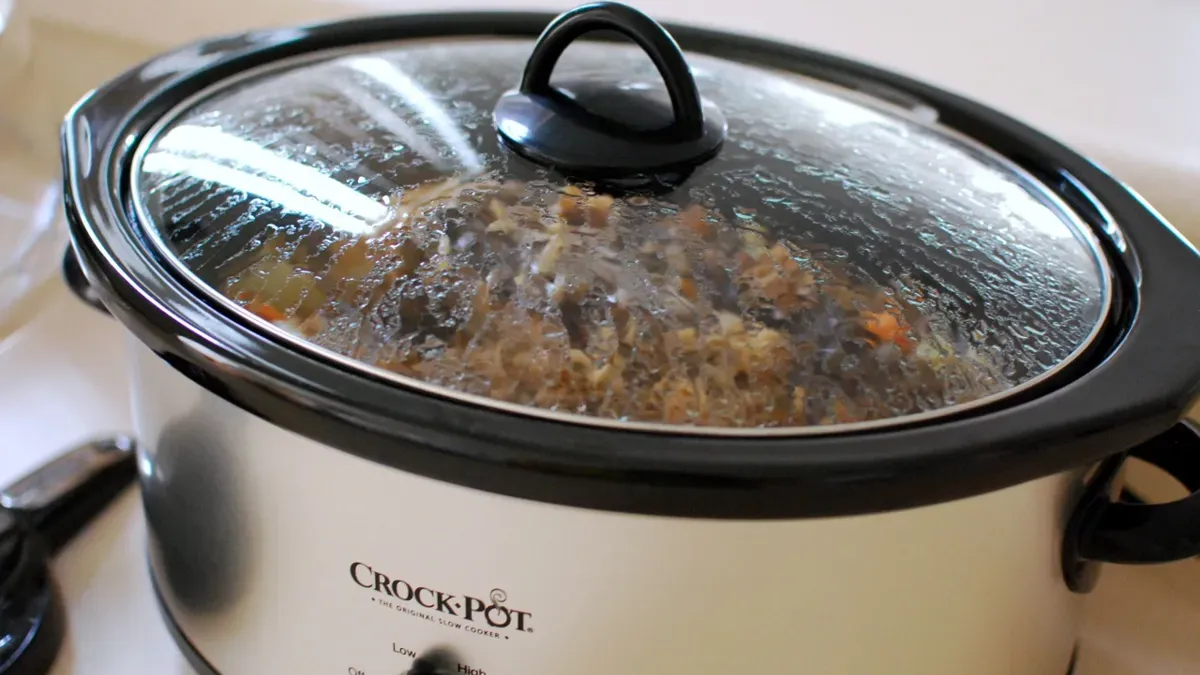
Example of a slow cooker. Photo: Your Best Digs / Wikimedia Commons, CC BY 2.0. -
Example of a slow cooker. Photo: Jameson Fink from New York, USA / Wikimedia Commons, CC BY 2.0. -
Example of a slow cooker. Photo: Gill King / Wikimedia Commons, CC BY-SA 2.0.


Watch: brand videos
The sums on this page use the Ofgem average Direct Debit electricity rate for 1 January to 31 March 2027. In 1 October to 31 December 2026 it was 26.32p/kWh. See the January 2027 price cap and the appliance table. A meter photo near 1 January is the meter note.
An air fryer and an electric oven are the same kind of machine at heart. An element heats air, a fan moves it, and a thermostat cycles the element once the cavity is up to temperature. At the point of use, the electricity that stays in the appliance ends up as heat. There is no hidden percentage that makes one of them “80% efficient” and the other not, and this site will not print one.
The running-cost difference is the kilowatt hours drawn for the meal you actually cook. That is power over time, measured, not a slogan.
What the badge can and cannot tell you
The power on the rating plate is the most the appliance is built to draw. During preheat it may sit near that number. During the cook it cycles. A fan oven preheating a large cavity spends energy warming metal and air you do not eat. An air fryer warms a smaller basket, so a single portion of chips can be finished sooner. A family tray of roast vegetables may not fit, and two or three batches can erase the advantage.
So the honest test is a plug-in energy monitor on the socket, reset before you start, read after you finish, including preheat. The monitor note explains the limits of that meter. The supplier’s meter is still the one that bills you. A plug-in monitor is for comparison: this meal against that meal, on your appliances.
Upper bounds, clearly labelled
These are not measurements of any air fryer or any oven. They are the cost if the appliance drew its nameplate power for the whole time, with no thermostat cycling. Real cooks will usually cost less than this. The rate is 32.69p/kWh for 1 January to 31 March 2027.
If something labelled 1,500 watts drew that continuously for 20 minutes:
1,500 W for 20 minutes = 0.5 kWh × 32.69p/kWh = 16.35p
If an oven labelled 2,000 watts drew that continuously for 45 minutes, preheat included:
2,000 W for 45 minutes = 1.5 kWh × 32.69p/kWh = 49.04p
If that same oven drew 2,000 watts for a 15 minute preheat and then averaged far less, you cannot know the second half without a meter. Use the preheat as a separate upper bound:
2,000 W for 15 minutes = 0.5 kWh × 32.69p/kWh = 16.35p
A second air-fryer batch is another 20 minutes at the same assumption:
1,500 W for 20 minutes = 0.5 kWh × 32.69p/kWh = 16.35p
Two batches at that flat assumption cost about the same as one, added together. That is how a small basket loses to a full oven on a large meal, even before you value your time. It is also how a single portion loses the other way: you paid to heat a whole oven cavity for one piece of food.
Write the assumption next to the number every time you do this for yourself. “Nameplate, no cycling” is an upper bound. “Meter on the plug” is a measurement. They are not the same sentence.
Gas ovens
The gas unit rate on this cap is 10.96p/kWh, against 32.69p/kWh for electricity, so a kilowatt hour of electricity costs about 2.98 times a kilowatt hour of gas. That is the fuel-price ratio from the heater note. It is not a cost per roast dinner.
A domestic gas oven is not on a plug. You cannot hang a smart plug on it. Unless you have a way to read the gas meter for that meal alone, and to convert the meter units properly, you do not have a per-meal figure. This note does not invent one. People who cook a lot on gas already have the cheaper fuel per kilowatt hour. People who cook a small electric meal in a basket may still use fewer kilowatt hours than they would heating a large electric oven. Both can be true.
The decision that is actually in front of you
Use the air fryer when the food fits in one basket and you would otherwise heat the big oven. Use the oven when you are cooking a full tray, or when a second and third batch would run longer than the oven. Use a meter once or twice so the habit is based on your machines, not on a thumbnail.
There is a separate question the electricity sum does not answer: another appliance is another thing to make, house and eventually scrap. If you already own both, the running cost is the live question. If you own neither, the purchase price is on the retailer’s page today, which is why it is not printed here.
Common questions
Is an air fryer always cheaper than an oven?
No. An air fryer heats a small basket and often finishes a small portion sooner. A large meal can take several batches, and the oven may then use less electricity, or simply be the practical choice. Nameplate watts times a guessed time is not a measurement. A plug-in monitor on that meal is.
Why not multiply the wattage on the box by the cooking time?
Because the wattage is usually a maximum. A thermostat switches the element. The oven or the fryer spends part of the cook drawing much less. Multiplying the badge by the full time overstates the cost. It is still a useful upper bound if you label it as an upper bound.
Can this page cost a gas oven per meal?
Not honestly. The gas unit rate is published, but a domestic gas oven does not show you the kilowatt hours for one tray of food. Without that measurement, a comparison would be a guess. This note does not guess.