UK home energy

Know the running cost before you buy.

BillSteady turns a label and the Ofgem unit rate into pence. The figures are cited, or they are a sum you can redo. We have not tested these products.

Working it out per hour

A house losing heat through the roof and the glass Illustration only. The glow marks the roof and the windows, which is where a home loses heat. It is not a measurement.
Heat leaves through the roof and the glass. The glow is a diagram, not a survey.
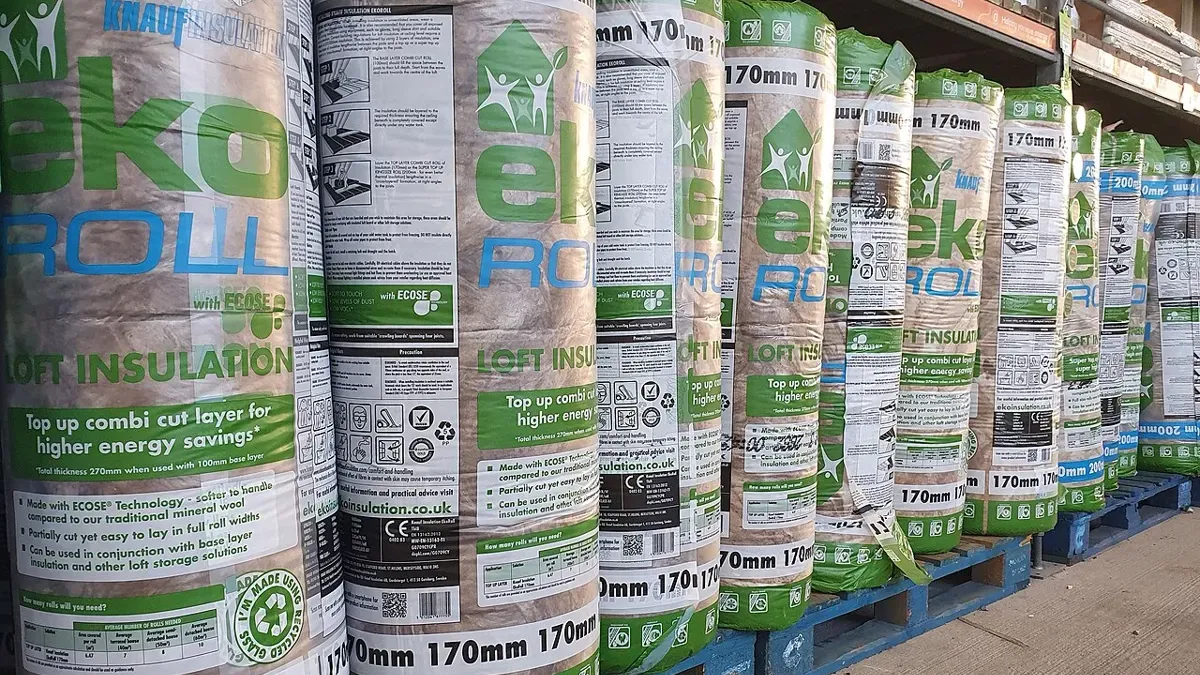
Loft insulation for sale, B&Q store, Pool, Cornwall - November 2022
Example of a loft insulation. Photo: Mutney / Wikimedia Commons, CC BY-SA 4.0.

Right now

Ofgem announced the January 2027 price cap on 25 November 2026. The £100 Household Energy Payment is a separate scheme, described here only for England.

Best picks

A clearer way to choose.

Each tile is a way of doing the job, not a model we tested. The button opens an Amazon UK search, or the official grant page. The price is not printed here.

1,500 W

Oil-filled radiator

Our pick for holding one room

Oil-filled radiator

Same heat per unit of electricity as any other resistive heater. It feels steadier because the thermostat cycles and the oil holds some warmth.

Example running cost
1,500 W for 1 hour = 1.5 kWh × 32.69p/kWh = 49.04p An upper bound if the element drew 1,500 W for the whole hour. A thermostat usually means less.
What actually changes the bill
Average power and hours, not the badge on the front

Pros

  • The surface stays warm after the element switches off
  • A timer is what stops it running all evening

Flaws but not dealbreakers

  • Slow to take the chill off a cold room
  • Still about one unit of heat per unit of electricity
Check price on Amazon Open 1,500 W in the calculator Cheapest electric heaters to run in the UK

100 W

Heated throw

Our pick for one person, not the room

Heated throw

The bill falls only if the room heater or the thermostat can come down for those hours. Otherwise the throw is extra electricity.

Example running cost
100 W for 4 hours = 0.4 kWh × 32.69p/kWh = 13.08p Only if the label says 100 W. Many throws have more than one setting.
What it does not do
Change the temperature of an empty room

Pros

  • A small load next to a 2 kW heater
  • Useful when one person is still up

Flaws but not dealbreakers

  • No saving if everyone else still wants the heating at the same setpoint
  • Follow the care label. This site has not tested fabrics
Check price on Amazon Open 100 W in the calculator Heated throws and blankets versus heating the room
Loft insulation for sale, B&Q store, Pool, Cornwall - November 2022
Example of a loft insulation. Photo: Mutney / Wikimedia Commons, CC BY-SA 4.0.
Mineral wool loft roll

Our pick for a dry, easy loft

Mineral wool loft roll

Energy Saving Trust's depth is at least 270 mm. First layer between the joists, second across them. Do not start if the loft is damp.

Their published estimate
About £190 a year in Great Britain from nothing to 270 mm, in a typical three-bed semi
Top-up from 120 mm
About £17 a year in that same example

Pros

  • Stops a large share of heat leaving through an uninsulated roof
  • DIY if the hatch is easy and the loft is dry

Flaws but not dealbreakers

  • Squashed wool and covered eaves undo the job
  • Cables buried in insulation are a fire risk
Check price on Amazon Loft and pipe insulation you can do yourself
Boiler Upgrade Scheme

Our pick for a heat pump in England or Wales

Boiler Upgrade Scheme

The installer applies. The grant is a discount on the quote. One grant per property. Not for a hybrid, and not for replacing a system that is already low carbon.

Air or ground source
£7,500, or £9,000 for eligible off-grid oil or LPG until March 2027
Air-to-air
£2,500

Pros

  • Open, and the amounts are on GOV.UK
  • You can see the discount on the quote

Flaws but not dealbreakers

  • England and Wales only
  • The installer has to be the one who can apply
See the official page Grants for insulation and heating in the UK

This quarter

The cap in force.

Ofgem’s cap limits the unit rate and the standing charge on a default tariff. It does not cap the size of the bill. These are GB averages, not a quote for your postcode.

Ofgem price cap for 1 January to 31 March 2027
How you pay Illustrative annual bill Typical use behind that figure
Direct Debit, if this cap lasted a year £2,166 Ofgem’s annualised figure for a typical dual-fuel household on the current Typical Domestic Consumption Values. It is not a cap on your bill.

GB average Direct Debit rates for the same period

Fuel Unit rate Standing charge
Electricity 32.69p/kWh 54.77p a day
Gas 10.96p/kWh 29.65p a day

Announced by Ofgem on 25 November 2026. Ofgem will announce the following cap before 1 April 2027. These are GB average Direct Debit rates for 1 January to 31 March 2027. In 1 October to 31 December 2026 the electricity unit rate was 26.32p/kWh and the gas unit rate was 7.97p/kWh. Your postcode, meter and tariff can differ, and a fixed tariff is outside the cap. The illustrative bill is Ofgem’s annualised figure for a typical household if this cap lasted a year. It is not a ceiling on your total bill. Electricity rates do not include VAT until 30 June 2027. Gas rates include 5% VAT. Ofgem says the VAT change means costs cannot be compared directly with periods before October 2026. Northern Ireland is outside this cap. Sources: Ofgem — energy price cap will rise 26% from January 2027; Ofgem — energy price cap unit rates and standing charges; Ofgem — changes to the energy price cap, 1 January to 31 March 2027.

Hour-by-hour examples at this rate are in appliance running costs at the January 2027 cap. The announcement itself is the January price cap note.

How the price cap works
  1. 1

    Wholesale prices move

    Ofgem says continued conflict in the Middle East is pushing up international gas prices. Announced 25 November 2026.

  2. 2

    The cap limits the rate

    On a default tariff it limits the unit rate and the standing charge. It does not limit the size of the bill.

  3. 3

    Use decides the bill

    A typical Direct Debit illustration goes from £1,723 to £2,166 if this level lasted a year. Use more and you pay more.

About 20 million households on default tariffs are affected. About 10 million on a fixed tariff are not, while the fix lasts. Source: Ofgem, 25 November 2026.

Direct Debit illustration, checked periods only
Two bars. 1 October to 31 December 2026: £1,723. 1 January to 31 March 2027: £2,166. Both are Ofgem’s annualised typical Direct Debit figures if the cap level lasted a year. Earlier caps are not on this chart. £1,723 Oct–Dec 2026 £2,166 Jan–Mar 2027
The same two Ofgem figures as the chart
Period Typical Direct Debit, if sustained a year Electricity unit rate Gas unit rate
1 October to 31 December 2026 £1,723 26.32p/kWh 7.97p/kWh
1 January to 31 March 2027 £2,166 32.69p/kWh 10.96p/kWh

Checked 25 November 2026. Electricity unit rates exclude VAT until 30 June 2027. Gas includes 5% VAT. Ofgem says those periods cannot be compared directly with caps before October 2026 because of the VAT change. Older levels are on Ofgem’s default tariff levels page and are not copied here.

Explainer from Ofgem on YouTube. It is their explanation, not our test.

Watch: brand videos

Video from British Gas on YouTube. Made by the brand or retailer, so it is their pitch, not our test.
Video from EON Next on YouTube. Made by the brand or retailer, so it is their pitch, not our test.

Method

How a number gets onto this site.

  1. Cited

    An estimate from Energy Saving Trust, Ofgem or GOV.UK appears with the link, and with the home they modelled when they say so.

  2. Calculated

    A worked example is watts, hours and the unit rate. The label on the appliance is yours to read. The sum is shown in full.

  3. Left out

    If there is no official figure and no sum to show, the page does not invent a saving, a price, a rating or a review.

The notes

Every guide.

Running costs

Turn a label and a unit rate into pence. No league table of products.

  1. A cheaper way to heat one room One room, for the hours you are in it, with the wattage on the label. The January 2027 rate makes each of those hours cost more.
  2. Energy price cap January 2027: what changes and what to do Ofgem announced the January to March 2027 cap on 25 November 2026. The typical Direct Debit illustration rises if that level lasted a year. It is not a limit on your bill.
  3. Fixed or variable tariff, in Ofgem’s words The January 2027 cap moves default tariffs. A fixed deal stays put until it ends. This page does not tell you which to buy.
  4. Meter reading before the January 2027 price cap A dated photo and a reading sent near 1 January gives your supplier a split between the old cap and the new one. This is not a way to change the rate.
  5. Appliance running costs at the January 2027 price cap Example wattages at the January 2027 Direct Debit electricity rate. Check the label on your own appliance. Standing charges are not in the table.
  6. Cheapest electric heaters to run in the UK A resistive heater costs whatever its wattage and your unit rate say. The “cheap” one is the lower wattage you can switch off sooner, not a brand with a secret efficiency.
  7. Heated throws and blankets versus heating the room A throw warms a person. A heater warms a room. The bill only falls if the room thermostat can come down, or the heater can go off, for the hours you use the throw.
  8. Air fryer and oven running costs Both appliances turn electricity into heat. The cheaper meal is the one that draws fewer kilowatt hours, which depends on the food, the batch size and whether the oven is cycling.
  9. Ceiling fans in winter and destratification A ceiling fan does not heat a room. It stirs air. In a tall room that can make the thermostat and your feet agree more closely. There is no official UK household saving to quote.
  10. Switching to LED bulbs in a UK home Buy the light by lumens and the fitting by the cap you already have. Energy Saving Trust’s published saving is for replacing remaining halogen spotlights, and it will not match every house.

Fabric and draughts

Hold on to heat the house has already paid for.

  1. Radiator reflector foil and draught-proofing Foil belongs behind radiators on uninsulated outside walls. Draught-proofing belongs in accidental gaps. Vents, airbricks and flues are not gaps.
  2. Loft and pipe insulation you can do yourself Energy Saving Trust’s depth is at least 270 mm. The first layer goes between the joists, the second across them. Do not cover vents, do not bury cables, and do not start if the loft is damp.
  3. Thermal curtains A curtain is a layer of still air and a cover over cold glass. It is not a quoted U-value. Close it at dusk, open it to a sunny winter window, and keep it off the radiator.

Controls and measuring

What a thermostat and a meter can tell you, and what they cannot.

  1. Smart thermostats compared for UK boilers A smart thermostat is a room thermostat you can program, and sometimes a way to let the boiler modulate. It is not insulation. Match the receiver to the boiler before you compare apps.
  2. Energy monitors and smart plugs The supplier’s meter is what bills you. A plug-in monitor is for one socket. A clamp is for the whole house. None of them is a reason to take the cover off the fuseboard.

Damp and condensation

Cold surfaces, moisture, and the limits of a dehumidifier.

  1. Condensation and damp in a British winter Wipe, ventilate, and keep the vents open before you buy a machine. A dehumidifier does not fix a leak, and it does not bring in fresh air.
  2. Dehumidifiers for damp and condensation Condensation is moisture meeting a cold surface. A dehumidifier removes water that is already in the air. It does not mend a leak, dry a rising-damp wall, or bring in fresh air.

Grants

Which official schemes are open in November 2026, and which have closed.

  1. Household Energy Payment 2027: who gets the £100 A one-off £100 for about 20 million households in England, from 4 January 2027, if the home is the main residence and in council tax band A to D on 4 January. It is not a UK-wide scheme.
  2. Warm Home Discount, in GOV.UK’s words GOV.UK describes a one-off £150 off the electricity bill if you qualify. The supplier applies it. You are not paid the money. Checked 25 November 2026.
  3. Grants for insulation and heating in the UK The Great British Insulation Scheme has ended. ECO4 closes on 31 December 2026. The Boiler Upgrade Scheme and the Warm Homes Local Grant are still the pages to read, and each nation has its own scheme.