Home / Guides / A cheaper way to heat one room
A cheaper way to heat one room
One room, for the hours you are in it, with the wattage on the label. The January 2027 rate makes each of those hours cost more.

Where to read this
Start here.
These open a guide or an official page. There is no shop link in this row.
Our pick for the sum at the current rate
The heater note
Fan, panel and oil-filled heaters are the same kind of heat. The bill is watts times hours times the unit rate.
- Rate
- Ofgem average Direct Debit electricity cap for the current period
Pros
- The method does not depend on a brand
- A timer and a shut door are the controls that matter
Flaws but not dealbreakers
- Heating one room does not help if the boiler is still heating the house
- A 2 kW badge left on is still a 2 kW badge
In pictures
Commons photographs of this kind of thing. None of them is the item behind a buy button.
-
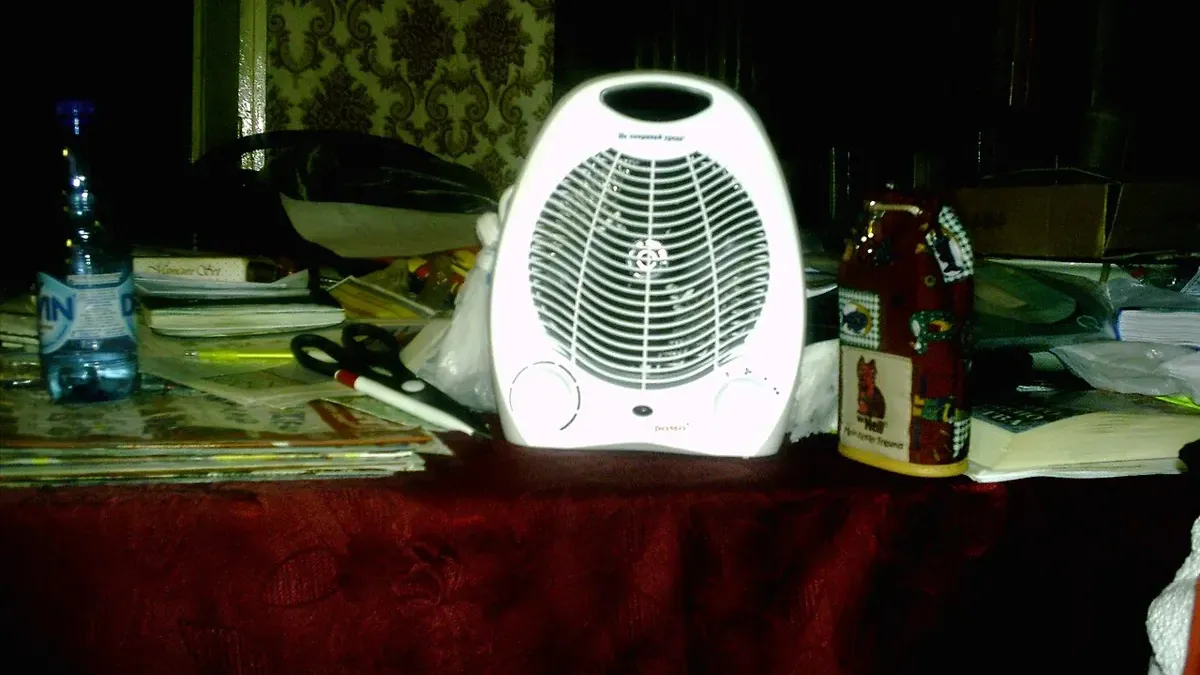
Example of a fan heater. Photo: Oleg Bor / Wikimedia Commons, CC BY-SA 4.0. -
Example of a fan heater. Photo: Antonio Mette / Wikimedia Commons, CC BY-SA 4.0. -
Example of a fan heater. Photo: Mehediabedin / Wikimedia Commons, CC BY-SA 4.0.


Checked 25 November 2026 against Energy Saving Trust’s heating-controls article, linked below, and against Ofgem’s January cap announcement for the unit rate. The rate is 32.69p/kWh for 1 January to 31 March 2027. In 1 October to 31 December 2026 it was 26.32p/kWh. A higher rate makes each hour cost more. It does not change which hours you needed.
The room, then the heater
A plug-in electric heater that warms by a resistive element turns the electricity it draws into heat in the room. A fan heater, a convector, a panel and an oil-filled radiator share that. There is no second kind of efficiency hiding in the brand. The cheaper session is the lower wattage, run for fewer hours, in the room you are actually in, with the door shut if the rest of the house does not need to be warm.
The arithmetic is in the heater note and in the running-cost table. Both use the January Direct Debit average and both say so. A nameplate is a maximum if a thermostat cycles the element. A badge left on at full power for the whole evening is the nameplate times the hours.
If the boiler or the heat pump is still trying to hold the whole house at the same temperature, the plug-in heater is an extra cost, not a replacement. Shutting one door does nothing to a system that is still calling for heat everywhere else.
What Energy Saving Trust says about the controls you already have
Energy Saving Trust’s article of 20 November 2026 is about central heating controls, not about a particular plug-in heater. These are their statements, for the homes they describe.
A room thermostat turns the heating on until the room reaches the temperature you set, then turns it off until the temperature drops. A house typically has one. Some have two or more. You do not need to turn it up when it is colder outside. The home still heats to the temperature you chose, though it may take longer on a colder day. Turning the thermostat up does not make the home heat any faster.
The thermostat needs a free flow of air. Energy Saving Trust says not to block it with curtains or furniture, and to keep it away from heat sources such as radiators. A thermostat sitting on top of a warm radiator is reading the radiator, not the room.
They say to set it to the lowest temperature you are comfortable with. For most people, they say, that is between 18°C and 21°C. They also publish a figure for one specific step: turning down from 22°C to 21°C can save £120 a year in Great Britain and £150 in Northern Ireland, on their model. That is their figure for that one degree on a central heating system. It is not a figure for a plug-in heater, and it is not a promise for your bill. If 21°C is too cold for the people in the house, the saving does not apply, because you will not leave it there.
A programmer or timer sets when the heating and hot water are allowed to run. Energy Saving Trust says the advice differs for a heat pump or for electric heating, and the boiler pattern they give is to come on about half an hour before you get up and to go off about half an hour before you go to bed. They say to check the clock, including after the clocks change if the programmer does not change itself. They also say you should put the heating on when you start to feel cold, and that the exact times depend on your circumstances. A programmer that heats an empty house all day is the expensive setting. A programmer that leaves you cold in the morning is the one you will override, which puts you back to manual.
Thermostatic radiator valves, in their description, sense the air around that radiator and ease the valve shut when the room is warmer than the setting. That is how you turn down rooms you are not using, which is the central-heating version of heating one room. A valve covered by a curtain or a sofa is sensing the wrong air, in the same way a blocked room thermostat is.
They also say that installing a programmer, a thermostat and thermostatic radiator valves, if you do not already have them, can save £100 a year in Great Britain and £130 in Northern Ireland. Again, that is their published figure for fitting those controls, not a BillSteady test and not a saving from a heater bought on this site.
The thermostat note is about matching a receiver to the boiler you have. It is not a ranking of apps, and it does not repeat these pound figures as if they were a property of a brand.
A person, rather than a room
If one person is cold and the room does not need to be warm for anyone else, a heated throw is the smaller electrical load. It does not heat the room. The bill falls only if the room heating can be lower or off for those hours. That limit is the whole of the throw note. A throw left on under a duvet in a house that is still held at 21°C is an extra, not a substitute.
Curtains and draught-proofing are the other half of “one room”. Energy Saving Trust’s heating article is not a curtain guide. The practical limits we already publish are in the curtain note and the draught-proofing note: cover the glass in the evening, do not hood a radiator, and do not block the vents a gas appliance or a wet room needs.
What this page will not rank
It will not name a heater model. It will not say that oil-filled is “more efficient” than a fan heater. At the point of use they are the same kind of heat. It will not convert Energy Saving Trust’s control figures into a payback for a product, because those figures are about controls on a central heating system, and the price of a product is whatever the shop shows on the day. The payback calculator on this site asks you to type both the price and a yearly figure you are willing to treat as a saving. It does not invent either number.
General information, not heating design advice.
Common questions
Is one plug-in heater more efficient than another?
At the point of use, a resistive electric heater turns the electricity it draws into heat. The difference is the wattage, the thermostat and the hours, which the heater note sets out. There is no hidden efficiency that beats that.
Does a heated throw heat the room?
No. It heats a person. It cuts the bill only if the room heating can be lower or off for those hours. That limit is in the throw note.
Does the January cap change which heater is cheaper?
It changes the price of each unit, not the order of the method. Fewer watts and fewer hours still cost less than more watts and more hours.