Home / Guides / Heated throws and blankets versus heating the room
Heated throws and blankets versus heating the room
A throw warms a person. A heater warms a room. The bill only falls if the room thermostat can come down, or the heater can go off, for the hours you use the throw.

Our top picks
Start here.
These are ways of solving the job, not scored products. An Amazon button opens a search. The price is whatever is on the page today.
100 W
Our pick for one person, not the room
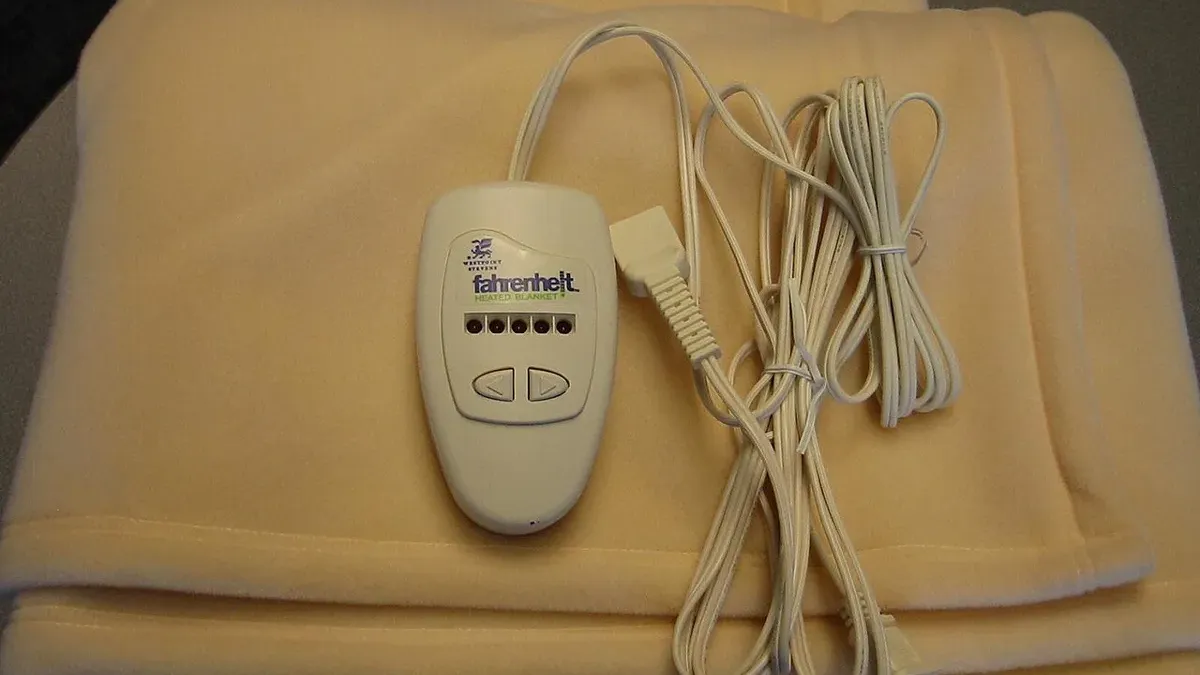
Heated throw
The bill falls only if the room heater or the thermostat can come down for those hours. Otherwise the throw is extra electricity.
- Example running cost
- 100 W for 4 hours = 0.4 kWh × 32.69p/kWh = 13.08p Only if the label says 100 W. Many throws have more than one setting.
- What it does not do
- Change the temperature of an empty room
Pros
- A small load next to a 2 kW heater
- Useful when one person is still up
Flaws but not dealbreakers
- No saving if everyone else still wants the heating at the same setpoint
- Follow the care label. This site has not tested fabrics

Our pick for the bed, on the setting the label allows
Electric underblanket
The sum is the same as a throw. The instructions are not. Some are preheat only, some are rated to stay on.
- Example running cost
- 60 W for 1 hour = 0.06 kWh × 32.69p/kWh = 1.96p An example. The overnight setting is whatever the badge says, not this number.
- Decide from
- The care label, not the title on the listing
Pros
- Can warm a bed without heating the whole house
- Low watts if the label agrees
Flaws but not dealbreakers
- A preheat model is not an all-night model
- Damaged flex or a scorched patch means stop using it
What it costs to run
Built from the cap file. One use is the wattage and time on the card. A day here means one such use. Thirty and 365 stack that same use. It is a maximum if the appliance drew that power the whole time.
| Example | One use | 30 uses | 365 uses |
|---|---|---|---|
| Heated throw100 W for 4 hours = 0.4 kWh × 32.69p/kWh = 13.08p | 13.08p | £3.92 | £47.73 |
| Electric underblanket60 W for 1 hour = 0.06 kWh × 32.69p/kWh = 1.96p | 1.96p | 58.84p | £7.16 |
Based on the average electricity price cap rate of 32.69p/kWh for 1 January to 31 March 2027, Direct Debit, England, Scotland and Wales. Your rate varies. VAT is not included in this electricity rate until 30 June 2027. Northern Ireland is outside this cap. A nameplate sum is a maximum: many appliances cycle. Source: Ofgem price cap. Last updated 2026-11-25.
Watch: brand videos
The sums on this page use the Ofgem average Direct Debit electricity rate for 1 January to 31 March 2027. In 1 October to 31 December 2026 it was 26.32p/kWh. See the January 2027 price cap and the appliance table. Heating one room, rather than one person, is the one-room note.
A heated throw is a small resistive load wrapped around one person. It is not a room heater, and it should not be written up as if it were. The fair comparison is comfort per person, then the effect on whatever else is heating the house.
What has to change for the bill to fall
If you sit under a throw and the room thermostat stays where it was, the boiler or the panel heater keeps working and the throw is extra electricity. The bill rises.
The bill falls when the throw lets you do one of these, for a real number of hours:
- switch off a plug-in heater that would otherwise have run
- set the room thermostat lower, in a house where that thermostat actually controls the heating
- heat only the person who is still up, while everyone else has gone to a cooler bedroom on purpose
Energy Saving Trust says that turning a room thermostat down from 22°C to 21°C can save around £120 a year in Great Britain and £150 in Northern Ireland. That is their estimate for the heating system, not for a throw. It depends on the house they model and on fuel prices at the time they calculated it. A throw is only connected to that figure if it is the reason you can live with the lower setpoint. If one person is warm under a throw and someone else turns the thermostat back up, the EST figure does not apply.
The sum, from the label you have
Do not take a wattage from this page and assume it is your throw. Read the rating plate. The plate often lists more than one heat setting. Cost the setting you use.
The rate in these examples is 32.69p/kWh for 1 January to 31 March 2027. Your bill may show a different rate. The method is in the heater note.
If the label says 60 watts and you use it for four hours:
60 W for 4 hours = 0.24 kWh × 32.69p/kWh = 7.85p
If the label says 100 watts for four hours:
100 W for 4 hours = 0.4 kWh × 32.69p/kWh = 13.08p
If the label says 150 watts for four hours:
150 W for 4 hours = 0.6 kWh × 32.69p/kWh = 19.61p
Put the same four hours next to a fan heater that really draws 2,000 watts, and the heater sum is:
2,000 W for 4 hours = 8 kWh × 32.69p/kWh = £2.62 (261.52p)
Those two numbers are not a saving you have been promised. The heater was warming the air. The throw was warming a lap. If you still need the room warm for other people, you cannot pocket the difference. If you were going to run that heater only for yourself, the difference is the point of the comparison.
An underblanket uses the same arithmetic. The risk lives in the instructions: a preheat blanket is meant to be switched off before you sleep, and an all-night blanket is built and marked for a lower overnight setting. If the booklet and the badge disagree with a seller’s title, believe the booklet.
Safety, from the label rather than from a review
Look for a UKCA or CE mark, which is a declaration by the manufacturer, not a test this site has done. Do not use a throw or a blanket with a damaged flex, a scorch mark, or a controller that feels loose. Do not fold it tightly while it is on if the instructions say not to: the heat has nowhere to go. Do not put a hot water bottle in the same bed if the instructions forbid it. Do not leave a product switched on unattended where the instructions say to stay with it.
A lot of harm with heated bedding is old kit and ignored care labels, not a subtle difference between two new models. Electrical Safety First is the public electrical-safety charity if you want the general guidance. For the product in your hand, the instructions win.
Plugs and smart plugs have a limit. A throw is usually well inside a 13 amp socket. A 3 kilowatt heater often is not a good candidate for a smart plug. That distinction is in the monitor note.
What this note will not tell you
It will not name a safest brand or a nicest fabric, and it will not score products. Those are not measurements this site has made. If you are buying one, use a current search and read the wattage and the care text on that listing, then check them again on the label when it arrives.
Common questions
Are heated throws a fixed wattage?
No. The wattage is whatever is printed on that throw. Many have more than one setting. Use the setting you actually use, and treat any example on this page as arithmetic from an assumed label, not as a description of a typical product.
Can a throw replace the heating for the whole household?
Only if the other people are comfortable with the heating off or set lower. A throw does not change the temperature of an empty room. If the boiler is still trying to hold the house at the same setpoint, the throw is an extra cost, not a saving.
Is an electric underblanket the same calculation?
The sum is the same: watts times hours times the unit rate. The instructions are not the same. Some underblankets are rated to stay on, and some are for preheating only. The label decides. This site does not.